Showing posts with label watershed. Show all posts

Saturday, November 5, 2011


Rob Wright of the N.E.S.T program who has been an excellent mentor and a wealth of advice for our Watershed project and Nina Powers are giving three WOW presentations next week as part of the November events.


Here’s the complete WOW events brochure that is on Science and Environment Council’s website:
November 8
Sarasota County Government – The Energy-Water Connection
Learn how you can conserve water at home and, as a result, conserve energy and resources and save money. This includes building and landscape water and energy conservation, rainwater harvesting, low-impact development and green infrastructure. November 8, 2–3 p.m., Gulf Gate Library, 7112 Curtiss Ave., Sarasota. Free to the public; no reservations required.
Wednesday, November 9
Sarasota County Government – Living on the Water’s Edge
No matter where you live, your yard is connected to the bay and Gulf. This program provides a guide to sustainable landscaping along ponds, streams, canals, bayfronts and seawalls. Learn how you can make a difference with bay-friendly plant selection, design and maintenance choices. November 9, noon–1 p.m., at Marie Selby Botanical Gardens, Cooley Theater, 811 South Palm Ave., Sarasota. Free to the public, no reservations required.
Thursday, November 10
Sarasota County – Living on the Water’s Edge
No matter where you live, your yard is connected to the bay and Gulf. This program provides a guide to sustainable landscaping along ponds, streams, canals, bayfronts and seawalls. Learn how you can make a difference with bay-friendly plant selection, design and maintenance choices. November 10, 2–3 p.m., North Port Library, 13800 S. Tamiami Trail, North Port. Free to the public; no reservations required.

for more information on this and future events go to AllardPPC • BeSpoke Blog

Wednesday, November 2, 2011

Red Tide update....

10.21.11 report, sorry everyone running a bit behind, but catching up rapidly. In our area we're still in the clear thank goodness!


Southwest CoastThe Karenia brevis bloom first reported three weeks ago in southwest Florida, currently extends alongshore of southern Sarasota County south to Lee County.  Medium concentrations of K. brevishave been reported alongshore of Charlotte County with very low to low concentrations reported alongshore of southern Sarasota County. Analysis of water samples also confirmed the presence ofK. brevis in Pine Island Sound (Lee County).  Although weather prevented offshore sampling by FWRI and other researchers, measurements from two autonomous underwater vehicles (AUV’s) deployed by Mote Marine Laboratory and USF’s College of Marine Science, found a patchy bloom between 10 and 50 km offshore of Charlotte and Lee counties. 
Karenia brevis was not detected in water samples collected this week alongshore of Pinellas, Hillsborough, Manatee and Collier counties.       
Bloom Boundary
This week, Karenia brevis abundance was greatest alongshore of Charlotte County. Widespread fish kills have been associated with this bloom and respiratory irritation is possible in and around the bloom areas.
Northwest Coast
Karenia brevis, the Florida red tide organism, was not detected in water samples collected this week alongshore of Bay and Levy counties or offshore of Dixie County.
East Coast
Karenia brevis, the Florida red tide organism, was not detected in water samples collected this week in the Indian River Lagoon (Brevard County). An ongoing microflagellate bloom continues in this area (first reported on 05/13/2011). 

Friday, October 7, 2011

First benefits from the Littoral Zone discussions in Sarasota County


One of the first benefits to emerge for the initial Littoral Zone discussions is the new consolidated website for Resource Protection. User friendly with a wealth of knowledge just a click away. 

Still more steps in this process and for those who have the passion to become involved and enjoy Social interaction the NEST program is a great place to start. Lots of good advice and good people which I would highly recommend. From the new site...

The Sarasota County Neighborhood Environmental Stewardship Team, or NEST, promotes neighborhood involvement in environmentally friendly projects to protect and restore our shared water resources. The NEST program operates at the neighborhood-level to improve watershed-scale resources, and no matter where you are in Sarasota County, you are in one of the County's watersheds.

One of the NEST goals is to help citizens take an active role in evaluating the appearance and functionality of ponds and lakes by planting or maintaining appropriate watershed-friendly vegetation and trees along the banks or in the water.  Shoreline restorations will help to minimize bank erosion, improve water quality and provide wildlife, bird and fish habitat.  Shoreline restoration is an easy way to add beauty to your yard and neighborhood and help improve the health of the water bodies your stormwater impacts.  Remember that water from your pond may find its way downstream into our creeks, rivers, or bays so what you do can help to restore and protect our bays
To learn more about the NEST Program or to participate click here


Friday, September 16, 2011

Jobs and Dollars in Wetland Conservation

When it comes to hot topics Jobs would certainly be a the top at the list. What better form of self investment than the jobs created by Coastal and Wetland Restoration projects. In a recent report by Restore America's Estuaries (RAE) titled "Jobs & Dollars: Big Returns from Coastal Habitat Restoration," the benefits detailed are numerous. Not to forget the overall impact to tourism and its related jobs. Where would we be if we couldn't even enjoy some fishing or even go to the beach! A taste of that was when... the Red Tide made an extensive appearance on our West Coast Florida shoreline. Its since then I've been actively involved in conservation and preservation of our oceans. I wonder why!!

The article...


WASHINGTON--A landmark report released today by Restore America's Estuaries (RAE) shows that coasts and estuaries are not only essential to the nation's economy, but that investments in coastal habitat restoration produce jobs in a cash-strapped, job-starved economy at a higher rate than many other sectors, including oil and gas, road-infrastructure, and green building projects.

Download the report here


The report by Jeff Benoit, "Jobs & Dollars: Big Returns from Coastal Habitat Restoration," lays out a powerful case for government and private investment in the nation's coasts and estuaries, drawing on national and regional studies of coastal and estuarine  restoration projects and setting out its findings in restoration case studies.

Among "Jobs and Dollars" key findings:

Coastal habitat restoration--including wetland reconstruction and improvement; rebuilding depleted oyster beds; removal of obsolete dams, culverts, and other obstacles to fish passage; tree planting and floodplain restoration; and invasive species removal--typically create between 20 and 32 jobs for every $1 million invested. In comparison, road infrastructure projects on average create seven jobs per million, oil and gas return just five jobs, and green building retrofits produce 17 jobs per $1 million invested.

Habitat restoration not only creates local jobs, it brings dollar to local businesses. In one of the report's case studies, a watershed restoration project in Oregon, 80% of monies invested in the project stayed in county; 90% stayed in state.

Restoration not only creates direct jobs, people using their skills and equipment to restore damaged wetlands and other similar projects, but also helps stimulate indirect jobs in industries that supply project materials such as lumber, concrete, and plant materials, and supports induced jobs in businesses that provide local goods and services, such as clothing and food, to restoration workers.

Finally, restoration projects are a sure bet, boasting enviable returns on investment to local and regional economies in the form of new jobs, increased tourism and tourist dollars, hunting and fishing revenues, tax revenues, and property values.

"Investing to restore our nation's bays and estuaries is a win-win-win situation. It's good for the environment, creates jobs, and it boosts sagging local economies," said Jeff Benoit, President and CEO of Restore America's Estuaries.

How valuable are our coasts and estuaries?

While coastal-estuarine counties make up only 13% of the U.S. land area, they generate half the nation's GDP, and provide 40% of all American employment. More than three-quarters of all U.S. trade-some $850 billion total-passes through U.S. ports annually. Further, over 75% of all commercial fishing, 80-90% of recreational fishing, and 85% of waterfowl and migratory birds depend on estuaries. Combined, the hunting and fishing industry alone generates $80 billion a year.

But despite their obvious value, both ecologically and economically, America's coasts and estuaries are in trouble. Historic losses alone are staggering. The report documents that 97% of Columbia River salmon are gone. Likewise, 95% of all San Francisco Bay wetlands have vanished, sacrificed to development and commerce. The once great Chesapeake Bay oyster is down to one percent of historic levels. Half of the Great Lakes wetlands are gone.

Louisiana's wetlands are in a class by themselves. Louisiana's coastal wetlands are receding at an astounding rate of one football field an hour. Loss of the state's wetlands not only threatens lucrative industries like shrimping and crabbing, but also puts 45% of our national oil and gas refining capacity, and 43% of our strategic petroleum reserves at risk, as well.

"It is critical for our nation to invest in coastal habitat restoration," said Benoit. "Not only to address many of these problems, but to provide jobs for out-of-work commercial fishermen, work for marinas and boat captains and barge operators, and commerce for seaside businesses, ranging from bait and tackle shops to hotels and restaurants."

Founded in 1995, Restore America's Estuaries is a national alliance of 11 regional, coastal conservation organizations with more than 250,000 volunteer-members dedicated to preserving our nation's estuaries. RAE members include: American Littoral Society, Chesapeake Bay Foundation, Conservation Law Foundation, Coalition to Restore Coastal Louisiana, Galveston Bay Foundation, North Carolina Coastal Federation, People For Puget Sound, Save The Bay-Narragansett Bay, Save The Bay-San Francisco, Save the Sound, a program of the Connecticut Fund for the Environment, and Tampa Bay Watch.

Monday, August 22, 2011

Why I do what I do...

After an early AM surf session, in glassy minimal surf and clear water I came back to my deluge of emails and came upon this link which kinda explains why I'm so passionate about saving my playground and constantly adjusting the course of our businesses to help achieve those goals. The quote goes....


An old man walked up a shore littered with thousands of starfish, beached and dying after a storm.
A young man was picking them up and flinging them back into the ocean.
“Why do you bother?” the old man scoffed, “You’re not saving enough to make a difference.”
The young man picked up another starfish and sent it spinning back to the water.
“Made a difference to that one.” he said

I think that sums us up... I been asked on numerous occasions how our business divisions interelate and without giving the whole game away I guess an explanation is due so our clientele new and old get a better understanding of "how we tick" and why... good blogging fodder me thinks.

Monday, August 1, 2011

Red Tide Report 7.29.11

East Coast
Karenia brevis, the Florida red tide organism, was not detected in a water sample collected this week in Guana Lake (St. Johns County).
 
Northwest Coast
Karenia brevis, the Florida red tide organism, was not detected in water samples collected this week alongshore of Bay, Dixie and Levy counties.
 
Southwest Coast
Karenia brevis, the Florida red tide organism, was not detected in water samples collected this week alongshore of Pinellas, Hillsborough, Manatee, Charlotte, Lee and Collier counties or offshore of Lee County.  One sample collected alongshore of Sarasota County and two samples collected offshore of Collier County contained background concentrations of K. brevis.
 
Discolored water reported alongshore and offshore of Collier County is from a mixed algal bloom that includes the dinoflagellate Takayama tuberculata and several species of diatoms.  Mortalities and morbidities of sharks, rays, various fish species, lobsters, crabs and other invertebrates have been reported concurrently with this bloom.

Thursday, July 28, 2011

Seagrass Survey Training

This is a good opportunity to learn about our local Watershed and Coastal Habitat as well as make new friends


Wednesday, July 20, 2011

Mote-Grown Plants Included in Recent Restoration... Purchase Locally Grown Seafood!


Purchase Mote-Grown Caviar and Sturgeon Today and Help Support Locally Grown Seafood Production


Dr. Kevan Main of Mote helps plant salt-tolerant plants during the North Lido Restoration Photo by Sara Kane, Sarasota Bay Estuary Program


Plants grown at the state-of-the-art Mote Aquaculture Park were recently included in a restoration project at North Lido Beach in Sarasota. 

The Mote-grown plants were produced through a pilot project funded by the Sea Grant program. Mote and partners, including Aquatic Plants of Florida, are growing plants for restoration projects using solid fish waste from the production of saltwater fish and the water waste from its production of freshwater Siberian sturgeon.

By using this waste to feed plants — and doing it on a large enough scale to translate to commercial operations — this innovative system could serve as a model for sustainable marine aquaculture efforts across the nation and beyond.  
“For years, Mote has developed recirculating aquaculture technology to reduce the environmental impact of producing seafood — but there’s still is an impact if you can’t use the solid waste,” said Dr. Kevan Main, Director of Mote’s Center for Aquaculture Research and Development.
“When I show people around Mote’s facility and point out that the saltwater is completely recirculated, some observant person will ask, ‘Where do the solids go?’ Now we’re using them up to grow plants for coastal environments.” 

So far, the plant growth at MAP has “exceeded expectations,” reports Gil Sharell, founder and president of Aquatic Plants of Florida. “The growth is exceptional and maintenance is less than traditional propagation at our farm. We’re evaluating whether to expand the program later this year with Dr. Main and her team by constructing another plant production greenhouse at MAP.”

Almost 200 salt-tolerant plants from MAP were used in the North Lido Restoration. The project was undertaken by members of the Sarasota Bay Estuary Program Bay Guardian volunteers, along with Around the Bend Nature Tours, and took place on July 9. In all, 2,065 native plants were used.

Having plants grown at Mote used locally as part of an important restoration undertaking is rewarding, Main said. “The idea is to be as sustainable as possible in the production of fish for food,” she said. “Being able to grow plants for restoration and have them planted here locally in Sarasota is just an extra reward for us.

Friday, July 15, 2011

Todays Red Tide report via FWC


Mmmmm I guess its been raining, getting a bit more active...

via the FWC
East Coast
Karenia brevis, the Florida red tide organism, was not detected in water samples collected this week in the Indian River (Brevard and Indian River counties).
 
Discolored water that has been reported in the Indian and Banana Rivers (Brevard County) for almost two months (first reported 05/13/2011) is from an ongoing bloom of a non-toxic alga. In other areas of the Indian River (Indian River Aquatic Preserve, Indian River County), there have been reports of discolored water due to a bloom of the dinoflagellate Takayama tasmanica.  Fish kills have recently co-occurred with algal blooms throughout the Indian River Lagoon.
 
Northwest Coast
Karenia brevis, the Florida red tide organism, was not detected in water samples collected this week alongshore of Okaloosa, Bay and Levy counties or offshore of Okaloosa and Levy counties.  One sample collected alongshore of Dixie County contained background concentrations of K. brevis.
 
Southwest Coast
Karenia brevis, the Florida red tide organism, was not detected in water samples collected this week alongshore of Pinellas, Hillsborough, Lee and Collier counties or offshore of Sarasota County and the Florida Keys (Monroe County). One sample collected alongshore of Charlotte County contained background concentrations of K. brevis and three samples (of 75 total samples) collected inshore and alongshore of Sarasota County contained concentrations of K. brevis ranging from background to very low.
 
You can access this week’s interactive Google Map in the attached file.
 
In order to view this map, you must have Google Earth installed on your computer. The Google Earth software can be downloaded from the Google Earth Web site through the following link: (http://earth.google.com).
 
This information is also available on our Web site: (http://myfwc.com/research/redtide/events/status/statewide/).
The Web site also provides links to additional information related to the topic of Florida red tide including satellite imagery, experimental red tide forecasts, shellfish harvesting areas, the FWC Fish Kill Hotline, the Aquatic Toxins Hotline (for information or to report human health effects), and other wildlife related hotlines: (http://myfwc.com/research/redtide/events/status/contact/)

Thursday, July 7, 2011

Tidal Energy. New Interactive Map Reveals US Tidal Energy Resources


Tidal energy—one of the fastest growing emerging technologies in the renewable sector—holds great promise for clean energy generation. And now, a first of its kind database gives researchers deeper insight into the potential of this vast energy resource for the United States.
The online database, developed at the Georgia Institute of Technology (Georgia Tech) with the help of a $469,500 award from the U.S. Department of Energy, maps the energy available in the nation’s tidal streams. Researchers at Georgia Tech’s Savannah campus used the Regional Ocean Model to simulate tidal flows along the entire U.S. coastline, which is marked by thousands of streams, rivers and bays subject to daily tides. DOE’s Oak Ridge National Laboratory validated the model’s accuracy and the resulting data are now publically available.
Full story

Wednesday, June 29, 2011

Latest Red Tide update


No samples have been collected so far this week on the east coast of Florida or in northwest Florida.
In southwest Florida, Karenia brevis, the Florida red tide organism, was not detected in water samples collected this week in samples collected alongshore of Hillsborough, Pinellas, Sarasota and Collier counties.

Monday, June 27, 2011

Corona interested in a pilot project? Corona CMO Talks Social and Mobile Marketing

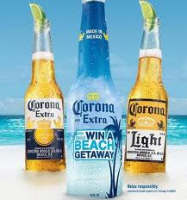
Corona, interested in a pilot Strategic Community Investment Program beneficial to Beaches, Parks and Community? Most of the elements are already in place and we're looking for a sponsor or sponsors. Could tie-in very nicely :) The program could be easily emulated in geo's throughout the country and utilize Social Media Channels

article via Chief Social Marketer and Patricia Odell

If you don’t know where your beach is, real or imagined, Corona will help you find it. It’s latest program, “Find Your Beach,” uses social and mobile to encourage people to dream up their own beach setting as opposed to just enjoying the tranquil beach images Corona has conjured up for years. n May, a major retail promotion, “Corona Beach Getaway,” sweepstakes set the stage for the summer program with codes placed on bottles and cans of Corona and hidden in packages distributed across the country. Phase two, “Find Your Beach” kicked off with TV spots, but focuses on a new Facebook page and mobile program. 

Jim Sabia, chief marketing officer for Corona parent Crown Imports, talks about the importance of social media in the Corona campaign.

Friday, June 24, 2011

Red Tide report 6.24.11 via FWC


East Coast
Karenia brevis, the Florida red tide organism, was not detected in water samples collected this week in the Indian River Lagoon (Brevard County) or offshore of Volusia County.
 
Discolored water reported in the Indian and Banana Rivers (Brevard County) for the past several weeks (first reported 05/13/2011) is from a continuing bloom of the prasinophyteNephroselmis. No effects of this bloom have been reported.
 
 
Northwest Coast
Karenia brevis, the Florida red tide organism, was not detected in samples collected this week alongshore of Dixie and Levy counties or offshore of Hernando County.
 
Southwest Coast
Karenia brevis, the Florida red tide organism, was not detected in water samples collected this week alongshore of Pinellas, Hillsborough, Manatee, Charlotte, Lee and Collier counties or offshore of Pinellas County and the Florida Keys (Monroe County). Two samples collected alongshore of Sarasota County (out of 25 total samples) and one sample collected offshore of Sarasota County each contained background concentrations of K. brevis. 
 
You can access this week’s interactive Google Map in the attached file.
 
In order to view this map, you must have Google Earth installed on your computer. The Google Earth software can be downloaded from the Google Earth Web site through the following link: (http://earth.google.com)

Walkabout on Lido Key with E.G. Bennington, Horticulturist

To kick-off the start of one of our Strategic Community Investment Projects it necessitated a Nature Walk to capture pictures for the interns who will create the graphics for the program.  We covered a fair bit in limited time (check the map out, and no we didn't walk on water for some bizarre reason my GPS and Google Earth shows it this way!).
E.G. gave us all an in-depth education (he's a wealth of knowledge on this subject) on the Native Plants let alone the Invasive ones and the ongoing battle with the latter. Interestingly though there's a partnership of sorts with local citizens wanting the removal of Australian Pines and the Park too, benefitting both in the process let alone the habitat. On to the next stage....

Thursday, June 23, 2011

#OurWatershedProject: The Golden Canna is back

Three weeks since taking the Machete' to the Golden Canna after its full bloom and going to seed (when the leaves look their worse) along with some professional advice I found by just cutting it completely back new strong vibrant growth occurs along with another showy display.

Even better for the embankment with a good root system in place our erosion has all but stopped since we installed the Native Plants in 2005/6

We'll need it when the rains and downpours arrive....

Tuesday, June 21, 2011

Red Tide update 6.22.11


No samples have been collected so far this week on the east coast of Florida or in northwest Florida.
In southwest Florida, Karenia brevis was not detected in water samples collected this week in Safety Harbor (Pinellas County) or alongshore of Pinellas and Hillsborough counties. Two samples collected alongshore of Sarasota County (out of 20 total samples) contained background concentrations of K. brevis.

Monday, June 20, 2011

Gulf Alliance GOMA Smart Yard info

Developed by a partnership between the Education and Nutrient Priority Issue Teams, Smart Yard, Healthy Gulf  is a new public education campaign designed to reduce fertilizers entering local waters by helping people make responsible lawn fertilizer decisions.  Applying the proper amount of fertilizer at the proper time(s) of the growing season keeps lawns looking vibrant. It can save time and money. Not only will lawns be something to be proud of, but the Gulf of Mexico will be more resilient and healthy, including Gulf seafood!

Friday, June 17, 2011

6.17.11 Red Tide Report


East Coast
Karenia brevis, the Florida red tide organism, was not detected in water samples collected this week in the Indian River Lagoon (Brevard County) or offshore of Volusia County.
 
Discolored water reported in the Indian and Banana Rivers (Brevard County) for the past several weeks (first reported 05/13/2011) is from a continuing bloom of the prasinophyteNephroselmis. No effects of this bloom have been reported.
 
 
Northwest Coast
Karenia brevis, the Florida red tide organism, was not detected in a water sample collected this week alongshore of Citrus County.
 
 
Southwest Coast
Karenia brevis, the Florida red tide organism, was not detected in water samples collected this week alongshore of Manatee, Charlotte, Lee and Collier counties or offshore of Lee County. One sample collected alongshore and one offshore of Pinellas County and one sample collected inshore of Sarasota County each contained background concentrations of K. brevis.

Friday, December 18, 2009

Latest Red Tide status

Latest Red Tide status from FWC: SOUTHWEST COAST

Karenia brevis, the Florida red tide organism, was not detected in water samples collected this week alongshore of Pinellas, Charlotte, Lee and Collier counties or offshore of Pinellas County and the Florida Keys (Monroe County). Two samples (out of 8 total samples) collected alongshore of Manatee County contained background concentrations of K. brevis.

Samples collected alongshore and offshore of Sarasota County contained patchy concentrations of K. brevis ranging from not present to medium. Samples collected inside of the Sarasota Bay System contained concentrations ranging from not present to very low.

Bloom Boundary (alongshore): A patchy bloom of Karenia brevis has been detected alongshore and offshore of Sarasota County as well as inside of the Sarasota Bay System.